South Asian Magical Realism: 6 Novels Where Folklore Walks In
Updated
In South Asian magical realism, the miraculous turns up as part of ordinary life: a tree that speaks, children born at midnight, a goddess in the mangroves. Start with these.
In South Asian magical realism, the miraculous turns up as part of ordinary life: a tree that speaks, a thousand and one children born at midnight, a goddess in the mangroves. The tradition draws on folklore, epic and political history, and the best of it treats them as equally real.
A note on the data. When I searched Google Trends for the exact phrase 'south asian magical realism', the volume was too low to chart. The broader term does have an audience: searches for magical realism books peak in January and February and the rising related queries include magical realism novels and Murakami, with the United States leading. So readers find South Asian writers largely through the wider genre, which is the reason to read this list as a way in.
The six books run from the founding text to quiet recent fiction. Three are famous: Rushdie, Roy and Divakaruni's retelling of the Mahabharata. One is a novel of the Sundarbans, one a story about an immortal woman who runs a spice shop in Oakland, and one a gentle fable about a banyan that speaks.
What they have in common is that none explains itself. The miracle is accepted, and the surrounding world, with all its politics and grief, is what the reader is asked to look at.
If you are new to the tradition, start with Rushdie or Roy. If you like fables, start with the banyan.
One more suggestion: read these alongside the Latin American tradition. Rushdie has said, in interviews, that he learned from Márquez, and the echoes are easy to hear, but the South Asian books bring something of their own: the epics, the village deities and the political upheavals of partition and independence. If you have read One Hundred Years of Solitude, try Midnight's Children next. If you prefer something smaller, try the spice shop, or the banyan, which asks the question of where wisdom comes from and leaves it open.
The 6 picks
-
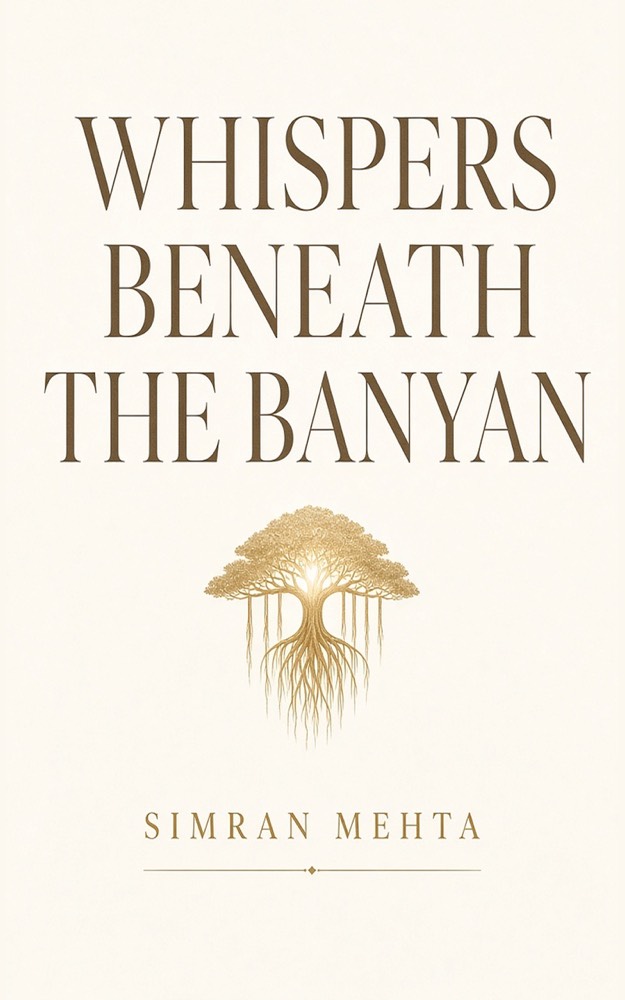
1. Whispers Beneath The Banyan On this site
by Simran Mehta
An abandoned child hears an ancient village banyan speaking, and the whole village begins to heal, until he learns where the counsel was really coming from.
An abandoned child hears an ancient village banyan speaking, and the whole village begins to heal, until he learns where the counsel was really coming from. It is contemplative magical realism, closer to a fable than an epic.
-
2. Midnight's Children
by Salman Rushdie
1,001 children born in the hour of India's independence, each with a gift. The founding text.
Salman Rushdie's 1981 novel follows Saleem Sinai, born at the moment of Indian independence, and the 1,001 children born in the same hour, each with a gift. It won the Booker Prize and is the founding text of the tradition.
-
3. The God of Small Things
by Arundhati Roy
Twins in Kerala, a family's small and enormous losses, and prose that bends time.
Arundhati Roy's 1997 novel follows twins Rahel and Estha in Kerala, and the small, enormous losses of a family. Time bends, and the prose bends with it. It won the Booker Prize the year it came out.
-
4. The Mistress of Spices
by Chitra Banerjee Divakaruni
An immortal woman runs a spice shop in Oakland, each spice holding a power she is forbidden to misuse.
Chitra Banerjee Divakaruni's 1997 novel follows Tilo, an immortal woman who runs a spice shop in Oakland, each spice holding a power she is forbidden to misuse. When she breaks her own rules for love, the spices begin to turn on her.
-
5. The Hungry Tide
by Amitav Ghosh
The Sundarbans, a tidal country where the legend of Bon Bibi is as present as the tigers.
Amitav Ghosh's 2004 novel is set in the Sundarbans, a tidal country of mangrove islands where the legend of Bon Bibi, the forest goddess, is as present as the tigers. A marine biologist, a translator and a fisherman's son are drawn together by the tide.
-
6. The Palace of Illusions
by Chitra Banerjee Divakaruni
The Mahabharata retold by Draupadi: myth as lived experience.
Divakaruni's 2008 novel retells the Mahabharata through Draupadi, who is called Panchaali. It treats myth as lived experience, and a woman's long argument with fate.
South asian magical realism: questions readers ask
What are the best South Asian magical realism books?
This list has 6 picks: Whispers Beneath The Banyan by Simran Mehta; Midnight's Children by Salman Rushdie; The God of Small Things by Arundhati Roy; The Mistress of Spices by Chitra Banerjee Divakaruni; The Hungry Tide by Amitav Ghosh; and The Palace of Illusions by Chitra Banerjee Divakaruni.
What is magical realism?
Magical realism is fiction set in the ordinary world in which extraordinary events are treated as normal by the characters.
Is The God of Small Things magical realism?
It is often described that way for its bending of time and its heightened prose, although it is rooted in realism. Readers often shelve it alongside the genre.
Which book retells an epic?
The Palace of Illusions retells the Mahabharata from Draupadi's point of view.
Is Haruki Murakami magical realism?
Murakami is often grouped with it, though critics debate the label. Readers who like him often enjoy the books on this list.
Which is the most fable-like?
Whispers Beneath The Banyan is the closest to a fable.
Where should I start?
Midnight's Children is the founding text. For something shorter and gentler, start with the banyan fable.