Books Like Interpreter of Maladies: Quiet Fiction About Marriage, Family and Belonging
Updated
Lahiri's stories find the crisis inside an ordinary marriage, an ordinary dinner, an ordinary move. These books share her restraint and her eye for what goes unsaid.
Jhumpa Lahiri's debut collection, Interpreter of Maladies, won the Pulitzer Prize in 2000 and gave readers a particular kind of short fiction: the crisis inside an ordinary marriage, an ordinary dinner or an ordinary move, told with restraint and an eye for what goes unsaid. The stories do not explain themselves, and the best of them end a beat before you want them to.
Interest in the book is surprisingly seasonal. Google Trends shows searches for the title rising sharply in late August and September 2026, peaking around the week of 20 September, and the strongest interest comes from Sri Lanka, Singapore and the United States. The rising related queries are the author's other work: Unaccustomed Earth, The Namesake and Jhumpa Lahiri herself. That pattern, readers moving from the first collection to everything else, is what this list is for.
The six books here share some of Lahiri's qualities: restraint, linked lives, South Asian and diaspora settings and a refusal to resolve what cannot be resolved. They cover short story collections, one novel in the same tone and one American writer who shares her precision.
If you want more of Lahiri herself, start with the first pick. For the rest, read for the same quiet attention.
A useful way to read short fiction like this is one story at a time, with a gap between. Lahiri's endings are open on purpose, and a day's pause makes them land. The same is true of Mistry's linked apartment-block stories, Divakaruni's marriages and Strout's town. If you prefer a novel, the pairing of A Man's Predicament and The Inheritance of Loss gives you the same patience at greater length. In every case, notice what the characters do not say, because that is where these writers keep the real story.
The 6 picks
-
1. Unaccustomed Earth
by Jhumpa Lahiri
Her second collection: longer stories, adult children, and parents growing older.
Lahiri's 2008 second collection has longer stories, adult children and ageing parents. Its last section is a linked trilogy about two people who keep failing to become what they could be to each other. It is the most natural next book.
-
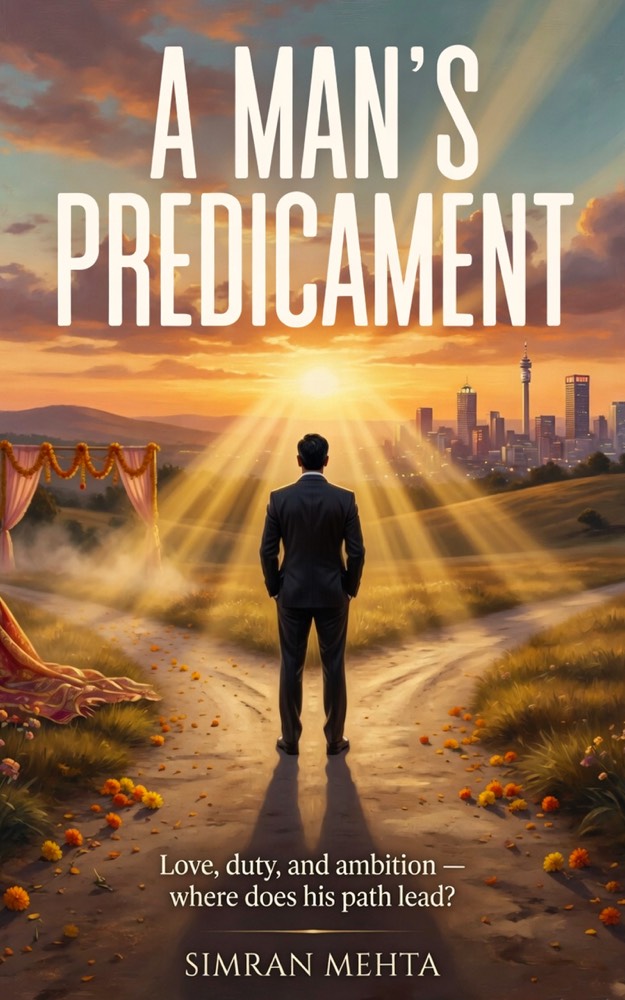
2. A Man's Predicament On this site
by Simran Mehta
Dushyant Kapoor built his life on duty and discipline. A quiet novel about marriage, ambition and an identity assembled from other people's expectations.
Dushyant Kapoor built his life on duty and discipline, from the extravagance of his wedding to the solitude of a man reckoning with what he agreed to. It is a novel instead of a collection, but it shares Lahiri's interest in marriage and the identity assembled from other people's expectations.
-
3. Arranged Marriage
by Chitra Banerjee Divakaruni
Stories of Indian women at the turning points of marriage, in India and America.
Chitra Banerjee Divakaruni's 1995 collection follows Indian women at turning points in marriage, in India and in America. The stories are short and direct, and the book is a useful companion to Lahiri's for its range of voices.
-
4. The Inheritance of Loss
by Kiran Desai
A retired judge in the Himalayas and his cook's son in New York. Belonging, and how hard it is.
Kiran Desai's novel, which won the Booker Prize in 2006, moves between a retired judge in Kalimpong and his cook's son in New York. It is longer than Lahiri's work but has the same patience, and it asks how hard belonging is wherever you are.
-
5. Swimming Lessons
by Rohinton Mistry
Linked stories from one Bombay apartment block. Small lives, rendered with care.
Rohinton Mistry's 1987 collection links stories set in one Bombay apartment block, Firozsha Baag. Small lives are rendered with care and humour, and the emigrant stories at the end echo the theme of Lahiri's later books.
-
6. Olive Kitteridge
by Elizabeth Strout
Interlocking stories about a marriage and a town, from a writer as precise as Lahiri.
Elizabeth Strout's Pulitzer Prize-winning 2008 book is a set of linked stories about a retired maths teacher and the town of Crosby, Maine. It has no South Asian setting, but it shares Lahiri's precision about marriage and the things people do not say.
Books like interpreter of maladies: questions readers ask
What are the best books like Interpreter of Maladies?
This list has 6 picks: Unaccustomed Earth by Jhumpa Lahiri; A Man's Predicament by Simran Mehta; Arranged Marriage by Chitra Banerjee Divakaruni; The Inheritance of Loss by Kiran Desai; Swimming Lessons by Rohinton Mistry; and Olive Kitteridge by Elizabeth Strout.
Which Jhumpa Lahiri book should I read after Interpreter of Maladies?
Unaccustomed Earth is the natural next collection, and The Namesake is her best-known novel.
Is Interpreter of Maladies a novel?
No. It is a collection of nine short stories, published in 1999.
What are the themes of the collection?
Marriage, migration, miscommunication and the gap between what people feel and what they say. Many of the stories are about interpreting, not communicating.
Is there a novel here with the same quiet tone?
A Man's Predicament and The Inheritance of Loss are the novels closest in tone.
Which collection is best for short reading sessions?
Swimming Lessons and Arranged Marriage work well in short sittings because each story stands alone.
Why do readers move from Interpreter of Maladies to other books by Lahiri?
Her three main books, Interpreter of Maladies, The Namesake and Unaccustomed Earth, form a natural progression: a first collection, a novel and a second collection. Readers who finish one usually want the others, which is why searches for her later titles rise alongside the first. If you have read all three, the other books on this list offer the same restraint from different writers, in India, in America and in the diaspora between.
Are these books good for readers who are new to South Asian fiction?
Yes. Each one assumes no background, and each focuses on ordinary life, marriage, family and work, which makes them accessible. The stories explain what they need to as they go, and the setting is part of the pleasure.